

The Phi Phi Islands
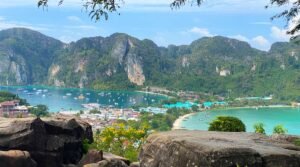 The Phi Phi Islands are one of the most beautiful places in the world. They are also one of the most famous tourist destinations in Thailand and Southeast Asia.
The islands are known for their soft white sandy beaches, clear turquoise water, huge limestone cliffs, and the famous Maya Bay. Maya Bay became especially popular after it was featured in the movie The Beach.
I had wanted to visit Thailand and discover a beautiful, peaceful beach like the one shown in The Beach ever since I first watched the movie. However, I kept delaying my trip to Koh Phi Phi because I had heard that the islands were too crowded, expensive, and overhyped.
There was also a time when Maya Bay was closed because too many tourists had caused serious damage to the environment. Then the Covid-19 pandemic happened, and I started thinking that I might never get the chance to visit this famous place.
Luckily, Maya Bay has now reopened for visitors. So, I decided it was finally time to visit Koh Phi Phi and see for myself if it was really worth the trip.
In this Koh Phi Phi travel guide, I’ll share my honest experience, useful tips, and things you should know before visiting, especially if you’re wondering whether Koh Phi Phi is worth adding to your Thailand travel plans.
Monument Valley: Where the Desert Meets the Sky
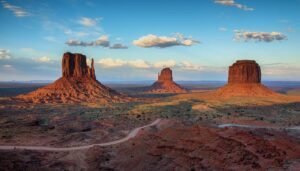 Imagine driving through the vast landscapes of the American Southwest, with nothing but endless desert, deep blue skies, and towering red-rock formations stretching across the horizon. Then, as the road curves through the desert, enormous sandstone buttes suddenly rise from the valley floor. This is Monument Valley, one of the most breathtaking landscapes in the United States.
Located along the Arizona-Utah border within the Navajo Nation, Monument Valley is famous for its dramatic red sandstone formations, wide-open desert scenery, and unforgettable sunsets. The landscape feels almost otherworldly, with massive rock formations standing alone against the sky as if they were carefully placed in the middle of the desert.
Uyuni Salt Flat: A Journey Across the Sky
 Imagine standing in the middle of a vast white landscape where the horizon seems to disappear completely. There are no buildings, no trees, and almost nothing around you—just an endless sheet of bright white salt stretching as far as your eyes can see. Above you, the blue sky seems to merge perfectly with the ground, creating the strange feeling that you are standing between two skies.
This is Salar de Uyuni, the world’s largest salt flat, located in southwestern Bolivia.
The journey across the salt flat is an adventure in itself. Most visitors explore Salar de Uyuni by four-wheel-drive vehicle, traveling across the enormous white expanse toward different attractions. One of the famous stops is Incahuasi Island, a rocky island rising dramatically from the middle of the salt flat. Covered with enormous ancient cacti, the island provides a remarkable contrast to the surrounding white landscape.
The best time to experience the salt flat depends on what you want to see. During the dry season, the surface is usually covered by the famous polygonal salt patterns, making it possible to travel across much of the salt flat. During the rainy season, a thin layer of water can create the spectacular mirror effect that has made Uyuni famous around the world. Conditions can vary, so travelers should check local conditions before planning their route.
Because Salar de Uyuni isn’t just a place where the sky is above you.
It’s a place where, for a moment, the sky seems to be everywhere.